
Projeto de Sistema de Montagem Fotovoltaica
Com base no projeto de capacidade do sistema de geração de energia fotovoltaica, no número e tamanho dos módulos fotovoltaicos, no ângulo de inclinação ideal do conjunto, na localização e no método de instalação dos módulos fotovoltaicos, etc., o sistema de montagem fotovoltaica é selecionado e projetado. O projeto de sistemas de montagem fotovoltaica exige que sejam robustos e confiáveis, e que considerem plenamente fatores como capacidade de carga, resistência ao vento, resistência a terremotos e resistência à corrosão.
1. Projeto de sistema de montagem fotovoltaica em telhado
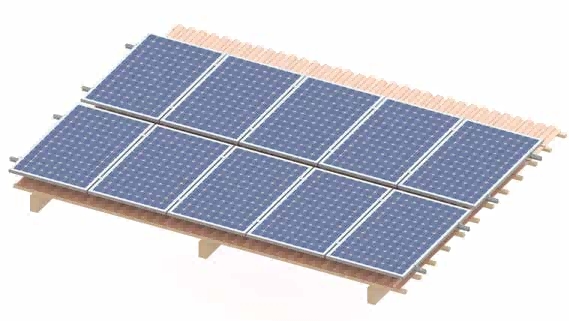
Projeto de sistemas de montagem fotovoltaica em telhados O sistema de montagem deve ser adaptado a diferentes estruturas de telhado. Para telhados inclinados, pode-se projetar um sistema paralelo à inclinação, com a altura de instalação a aproximadamente 10 cm acima da superfície do telhado para facilitar a ventilação e a dissipação de calor dos módulos fotovoltaicos. Alternativamente, um sistema de montagem com ângulo de inclinação, com a parte frontal mais baixa e a traseira mais alta, pode ser projetado para maximizar a energia solar recebida pelos módulos fotovoltaicos. Telhados planos geralmente requerem um sistema de montagem triangular, com o ângulo de inclinação da superfície de instalação correspondendo ao ângulo de inclinação ideal para a recepção da energia solar pelos módulos fotovoltaicos.
2. Fotovoltaica montada no solo Projeto de sistema de montagem de matrizes
Os sistemas de montagem de painéis fotovoltaicos em solo podem ser divididos em fixos, ajustáveis e com rastreamento automático. Os suportes para painéis fotovoltaicos em solo devem possuir resistência suficiente para atender aos requisitos de carga estática (por exemplo, peso da neve) e dinâmica (por exemplo, tufão) do conjunto fotovoltaico, garantindo uma instalação segura e confiável. A conexão entre os módulos e os suportes, e entre os suportes e a fundação, deve ser segura e capaz de suportar ventos de até 120 km/h (33,3 m/s) sem sofrer danos. A distância mínima entre a borda inferior dos módulos e o solo não deve ser inferior a 0,5 m, considerando principalmente os seguintes fatores: ① a profundidade máxima da neve na região; ② uma altura superior ao nível de inundação local; ③ a prevenção de respingos de lama e areia na superfície dos módulos fotovoltaicos durante a chuva; ④ a prevenção de danos causados por pequenos animais.
3. Projeto de suportes para montagem em poste
Projeto de Suportes para Montagem em Poste Os suportes para montagem em poste são geralmente usados em diversos tipos de postes de iluminação solar, luminárias para pátios e sistemas de alimentação solar para câmeras rodoviárias. O projeto requer as dimensões de comprimento e largura dos módulos de células solares, a localização e o espaçamento dos furos de montagem na parte traseira dos módulos e a compreensão do ângulo de inclinação ideal dos módulos de células solares no local de uso, ou um ângulo de inclinação ideal modificado, determinado no projeto do sistema. Ao projetar um suporte, ele pode ser dimensionado conforme a necessidade, com um ângulo de inclinação fixo, um ângulo de azimute ajustável ou ambos, ângulo de inclinação e ângulo de azimute ajustáveis.
Cadastre-se em nosso boletim informativo para obter informações atualizadas, promoções e insights.


 Rede IPv6 suportada
 português
 English
 español
 العربية
 中文
中文